What is earthing resistance: Meaning, Formula, Calculation & Practical Guide
What is earthing resistance

What Is Earthing Resistance? Earthing resistance is the opposition offered by an electrode while dissipating current into the ground. Its main formula is: R = ρ / 2πL (ln(4L/d) – 1). The ideal value for homes is 1–5 Ω, and for industries, it is less than 1 Ω̣. Introduction Earthing resistance is one of the … Read more

GI Earthing vs Copper Earthing: Difference, Comparison, Pros & Best Choice

GI Earthing vs Copper Earthing.

GI Earthing vs Copper Earthing: The main difference is that GI earthing (Galvanized Iron) is a low-cost option but prone to corrosion with medium conductivity, while constant Copper earthing provides very high conductivity, long lifespan, and stable low resistance. GI earthing is ideal for homes and small loads, whereas Copper earthing is recommended for industries, … Read more

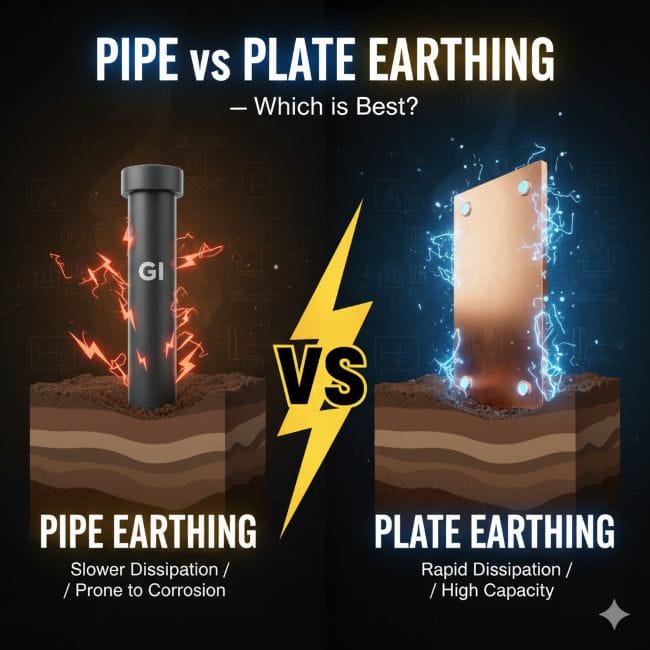
Pipe Earthing vs Plate Earthing: Best Earthing Method Explained with Real Facts

Pipe Earthing vs Plate Earthing

Pipe Earthing vs Plate Earthing: The main difference is that Pipe Earthing uses a vertical G.I. pipe and is low-cost, suitable for homes and small loads, while Plate Earthing uses a Copper or G.I. plate at a deeper depth, offering very low resistance and long life for heavy loads. Pipe earthing is ideal for domestic … Read more

Chemical Earthing vs Conventional Earthing – Practical Guide for Low-Resistance Systems

Chemical Earthing vs Conventional Earthing

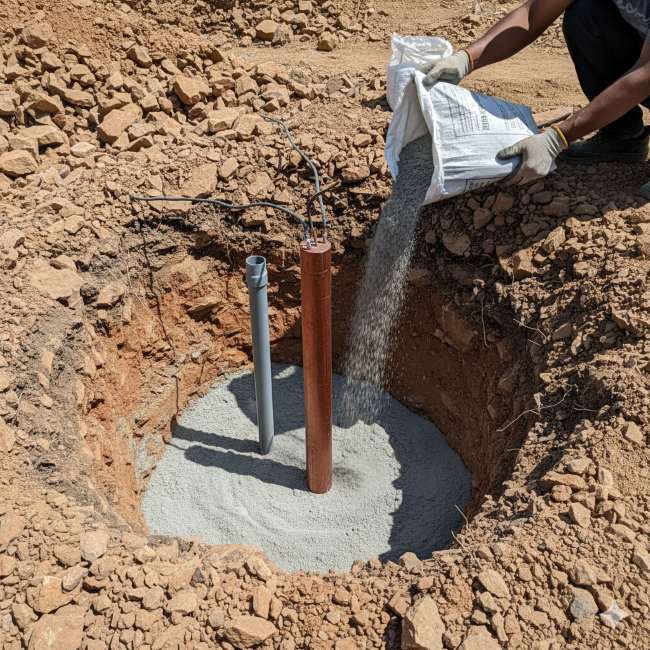
The main difference between Chemical Earthing vs Conventional Earthing lies in soil treatment and resistance performance. In Conventional Earthing, a G.I. pipe or copper plate is installed at a depth of 2–3 meters with a charcoal–salt mixture, and it requires regular watering. Because of this, its resistance generally remains around 5–10 Ω. In Chemical Earthing, … Read more

Difference Between Earthing & Grounding – Practical Electrical Safety Guide

Difference Between Earthing & Grounding –

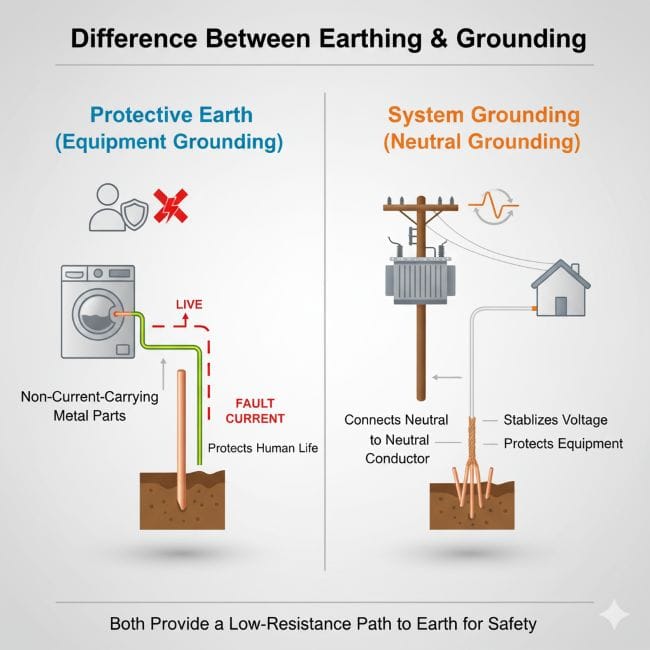
What is earthing? Earthing connects metal parts of electrical equipment or neutral points to the earth, ensuring human safety, equipment protection, and voltage stabilization during faults or surges. 2. What is grounding? Grounding connects the system neutral to earth, stabilizing system voltage and providing a safe return path for excess or fault current. 3. Difference … Read more

How to Measure Earth Resistance at Home – Practical Step-by-Step Guide

How to Measure Earth Resistance

How to Measure Earth Resistance? To measure earth resistance at home, use the 3-point fall-of-potential method with main, current, and potential electrodes. Ensure rods are 3–4 meters deep, properly spaced, and the soil is moist or treated with bentonite. Accurate readings help maintain low-resistance earthing for safety and equipment protection. Why measure earth resistance at … Read more

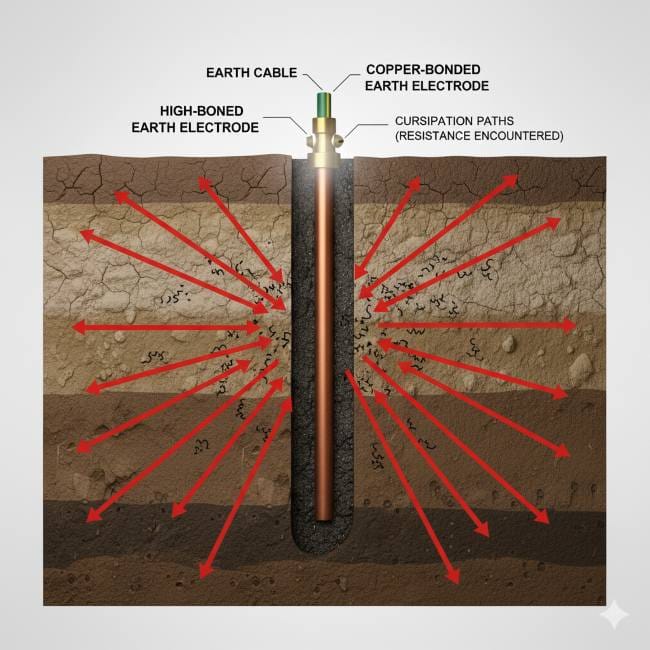
Earthing Electrode Types & Selection Guide – GI, Copper, Chemical & Practical Tips

Types of Earthing Electrodes with Practical Installation Tips

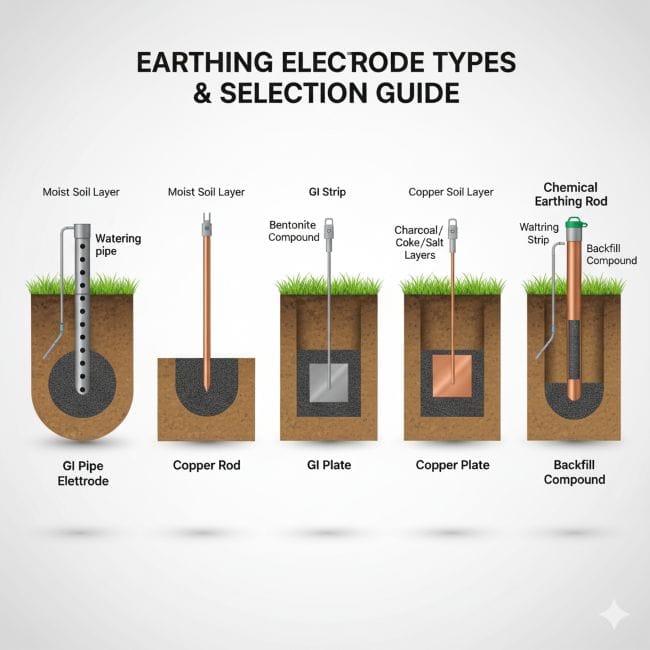
What are the types of earthing electrodes, and which one is best? Earthing electrodes include GI pipe, Copper pipe, GI plate, Copper plate, Chemical (copper-bonded) rod, and GI/Copper strips.The best electrode depends on soil type and load: For long-lasting and low-resistance earthing, use chemical or copper electrodes, maintain 10–12 ft depth, apply bentonite compound, test … Read more

Why Earthing Fails? 10 Real Reasons, Practical Solutions & Safety Guide

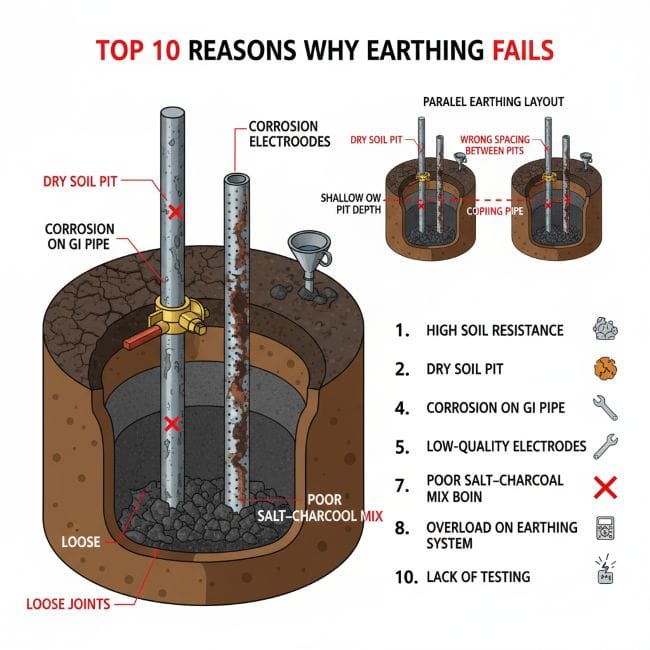
Technical diagram showing the top reasons why earthing fails and practical solutions such as bentonite, deep pits, corrosion-free electrodes, and proper testing

Why Earthing Fails? Earthing failures mainly occur due to high soil resistance, poor-quality materials, dry pits, corrosion, loose joints, incorrect pit depth, and a lack of testing. To prevent earthing failure, use high-grade electrodes, maintain moisture, apply a bentonite compound, ensure a proper pit distance, perform seasonal testing, and utilize parallel multiple earthing pits to … Read more

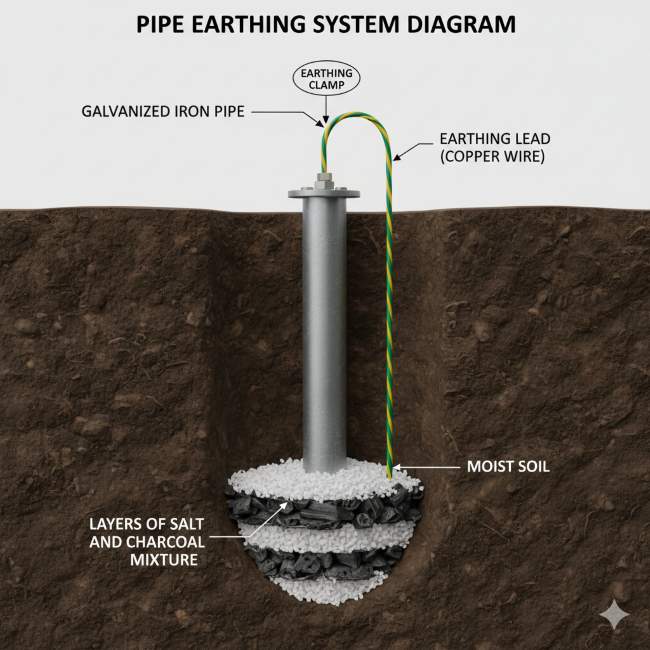
Pipe Earthing – Construction, Working, Advantages, and Applications

Pipe Earthing system diagram with G.I. pipe, charcoal, and salt layers buried underground"

1️⃣ What is Pipe Earthing? Answer:Pipe Earthing is an earthing system in which a galvanized iron (G.I.) pipe is installed vertically in the ground to discharge electrical current into the earth safely.It is used in both domestic and industrial installations. 2️⃣ Construction of Pipe Earthing Answer:In Pipe Earthing, a G.I. pipe of 30mm–65mm diameter and … Read more