
How to Measure Earth Resistance?
To measure earth resistance at home, use the 3-point fall-of-potential method with main, current, and potential electrodes. Ensure rods are 3–4 meters deep, properly spaced, and the soil is moist or treated with bentonite. Accurate readings help maintain low-resistance earthing for safety and equipment protection.
Why measure earth resistance at home?
To ensure a safe path for fault current, prevent electric shocks, protect appliances, and extend the earthing system’s life.
2. What tools are needed?
Earth resistance tester (Megger), 2 auxiliary rods (3–4 m), connecting wires, hammer, measuring tape, and optional multimeter.
3. How to measure earth resistance?
- Identify the main earth rod/pipe.
- Insert current (C) and potential (P) rods at proper spacing.
- Connect the tester using the 3-point (Fall-of-Potential) method.
- Take 3 readings and average them.
4. How to interpret readings?
- ≤5 Ω: Excellent
- 5–10 Ω: Acceptable
- 10–25 Ω: Poor
- 25 Ω: Dangerous
5. Tips for accurate measurement:
- Keep soil moist, use bentonite in dry areas
- Test away from metal fences/pipes
- Measure at night to reduce electrical noise
6. How often to test?
Every 6–12 months, especially before installing UPS or sensitive electronics.
Table of Contents
Introduction
Measuring earth resistance is a crucial step to ensure that your home or small business is connected to a safe, low-resistance earthing system.
Accurate measurement allows you to:
- Ensure a safe path for fault current
- Prevent electric shocks and equipment damage
- Increase the lifespan of your earthing system
In this guide, we cover:
- Tools and instruments required
- Real, practical step-by-step method
- Home-based accurate measurement techniques
- Troubleshooting tips
🔹 Tools and Instruments Required
- Earth Resistance Tester / Earth Megger – Digital or Analog
- Auxiliary Earth Rods – 2 rods, 3–4 meters each
- Connecting Wires – 15–20 meters
- Hammer / Mallet – For rod insertion
- Measuring Tape – For pit and spacing measurements
- Multimeter – Optional for cross-check
How to Measure Earth Resistance – Practical Step-by-Step
🧰 Step 1: Identify Main Earthing Point
- Usually near the electrical meter, breaker panel, or water pipe (if used for earthing)
- Check the GI pipe or copper rod connection
- Clean dirt, rust, or corrosion for good contact
Pro Tip: Ensure the surface is slightly damp — dry soil may give false high resistance readings
🧰 Step 2: Prepare Auxiliary Electrodes
Use two auxiliary earth rods for measurement:
- Current Electrode (C): 5–10 meters from the main earthing point
- Potential Electrode (P): Midway between main and current electrodes
Installation Tips:
- Insert rods vertically; avoid slanting
- Rod length: 3–4 meters, hammered fully into the soil
Practical Note:
- For rocky or dry soil, pour water or use bentonite around the rod for better contact

🧰 Step 3: Connect Earth Tester
Most testers use the 3-point method (Fall-of-Potential):
- E → Main earth electrode
- C → Current electrode
- P → Potential electrode
- Use long, straight wires; avoid loops
- Keep wires away from metal fences, pipes, and other conductors
🧰 Step 4: Perform the Measurement
- Switch ON the earth tester
- Select a range suitable for low resistance (0–10 Ω for home)
- Take reading; digital testers display Earth Resistance in ohms (Ω)
Practical Tip:
- Measure 3 times at slightly different positions of the potential rod (move 0.5–1 m)
- Average readings for accurate measurement
⚡ Step 5: Interpret the Result
| Reading (Ω) | Interpretation |
|---|---|
| 0–5 Ω | Excellent – Home is very safe |
| 5–10 Ω | Acceptable – Moderate load, safe |
| 10–25 Ω | Poor – Needs improvement |
| >25 Ω | Dangerous – Immediate attention required |
Pro Tip: For homes, ≤5 Ω is ideal, especially if using sensitive electronics, UPS, or inverters
🧠 Step 6: Practical Techniques to Improve Accuracy
- Moist Soil Around Rod: Dry soil → artificially high readings
- Bentonite Around Rod: Retains moisture → accurate readings
- Use Longer Rods: 3–4 meters recommended
- Proper Rod Spacing: 3–10 meters apart reduces interference
- Measure During Evening/Night: Less electrical noise → better readings
- Avoid Nearby Metal Fences or Pipes: They distort readings
- Multiple Measurements: Average several readings
- Check Wire Connections: Loose connections → false high readings
🛠 Step 7: Maintenance Check
- If resistance > 10 Ω → water the pit or backfill with bentonite/conductive compound
- Retest after 24 hours
- Regular testing: once every 6–12 months
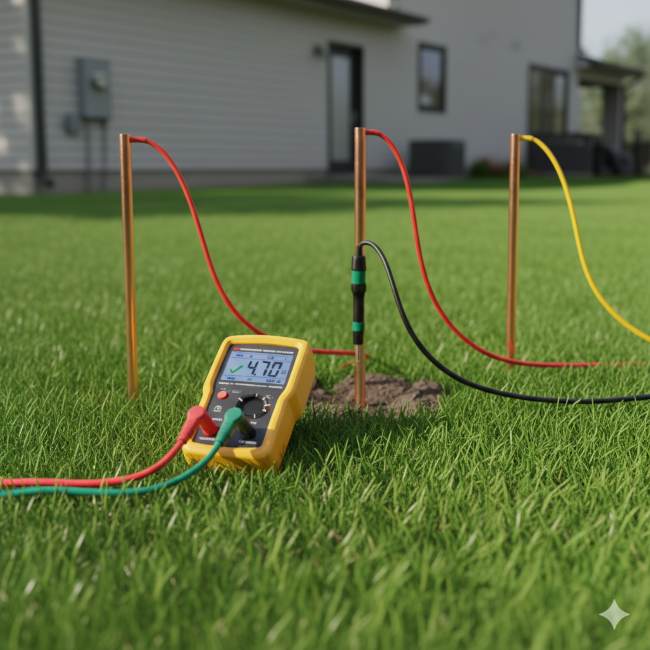
✅ Summary – Step-by-Step Practical Home Measurement
| Step | Description |
|---|---|
| 1. Identify Main Earthing Point | Find your home earth rod / GI pipe |
| 2. Insert Auxiliary Rods | Current & Potential electrodes, 3–4 m long |
| 3. Connect Earth Tester | 3-point method: E, C, P |
| 4. Take Reading | Digital/analog display in Ω |
| 5. Interpret Result | ≤5 Ω excellent, >25 Ω dangerous |
| 6. Improve Accuracy | Moisture, bentonite, rod spacing, multiple readings |
| 7. Maintenance Check | Water pit, replace soil compound, retest periodically |
🔍 Practical Notes from Field Engineers
- Never assume resistance is good just because a rod is installed
- Summer readings are usually the highest, and winter is lowest
- Parallel electrodes drastically reduce resistance
- Bentonite is highly recommended for dry areas
- Always test before installing sensitive electronics or new circuits
✅ Final Advice
Measuring earth resistance at home is not just a DIY check — it ensures your safety and protects expensive electrical equipment.
Follow real practical field techniques (rod depth, spacing, moisture, bentonite) and regular testing to maintain a safe and low-resistance earthing system.
Why should I measure earth resistance at home?
Measuring earth resistance ensures a safe path for fault current, prevents electric shocks, protects equipment, and prolongs your earthing system’s life.
What tools do I need for home earth resistance measurement?
Earth Resistance Tester / Megger (digital or analog)
Auxiliary Earth Rods (2 rods, 3–4 m each)
Connecting wires (15–20 m)
Hammer/Mallet and Measuring Tape
Optional: MultimeterHow often should home earthing be tested?
Every 6–12 months, or before installing sensitive electronics, UPS, or inverters.

Hi, I’m Pranjul — the person behind this website.
I hold a Diploma and B.Tech in Electrical Engineering, along with hands-on training through ITI. For over 3 years, I worked as an ITI College Instructor, teaching electrical fundamentals and practical skills to hundreds of students.
Through that experience, I noticed something: most electrical troubleshooting information online is either too technical for everyday homeowners, or too vague to actually solve real problems. That’s the gap this website aims to fill.