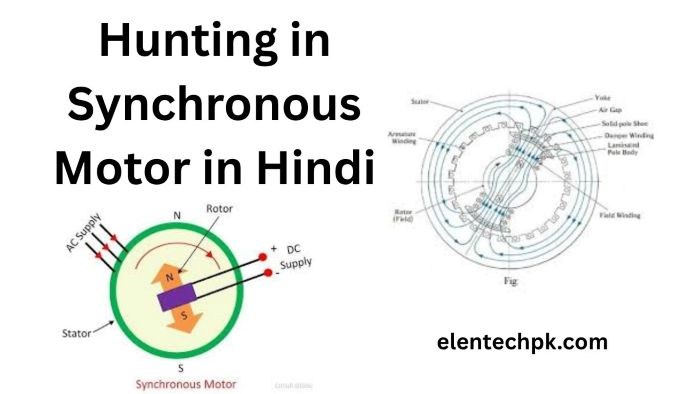
जब हम synchronous machine यानी synchronous motor का study करते हैं, तो वहाँ एक term आता है जिसे hunting कहते हैं। Basic रूप से, जब motor के load में अचानक change होता है, तो rotor नई equilibrium position को पाने के लिए आगे-पीछे oscillate करता है, और इसी phenomenon को hunting कहा जाता है। जब motor operate कर रही होती है और load में variation होता है, तब rotor rotating magnetic field के साथ अपनी नई position को search करता है, जिसे hunting कहा जाता है। इस विषय को Hunting in Synchronous Motor in Hindi को विस्तार में सरल और आसन भाषा में समझते हैं |
Synchronous Motor का Basic Construction और Working
Synchronous motor में stator के inner portion पर slots बने होते हैं, जिनमें three-phase winding होती है और core laminated होता है ताकि eddy current loss कम हो सके। Center में rotor होता है, जिस पर field winding होती है और उसमें DC excitation दिया जाता है। जब stator winding में three-phase supply दी जाती है, तो air gap में rotating magnetic field बनती है जो synchronous speed से rotate करती है, जिसका formula Ns = P/120f होता है। Rotor इसी rotating magnetic field के साथ same speed से rotate करता है, जो motor की normal working condition होती है।
Hunting in Synchronous Motor in Hindi (सिंक्रोनस मोटर में हंटिंग)
जब हम three phase synchronous motor को पढ़ते हैं, तब हमें एक interesting term मिलती है — Hunting। आसान शब्दों में समझें तो, जब मोटर पर load अचानक बदलता है, तो rotor तुरंत नई position पर stable नहीं हो पाता। वह कुछ समय तक आगे-पीछे हिलता रहता है, जैसे वह अपनी सही जगह को “ढूंढ” रहा हो। इसी behavior को हम Hunting या Phase Swinging कहते हैं।
Synchronous Motor की Equilibrium Condition
Steady state condition में rotor synchronous speed पर rotate करता है और load angle constant रहता है। लेकिन जब load में sudden change होता है, तब electromagnetic torque और load torque के बीच difference उत्पन्न होता है, जिससे speed change होती है। यह relation Te−TL=Jdtdω से दिया जाता है। Equilibrium condition को recover करने के लिए electromagnetic torque Te = ωs Xs 3VEf sinδ के अनुसार develop होता है।
सिंक्रोनस मोटर सही तरीके से तब काम करती है जब उसका electromagnetic torque और load torque बराबर और opposite होते हैं। इस स्थिति में motor stable रहती है, rotor synchronous speed पर चलता है और load angle (δ) भी constant रहता है। इसे ही steady state condition कहा जाता है।
Electromagnetic Torque (Te) = Load Torque (Tl)
इस condition में:
- Rotor constant synchronous speed पर चलता है
- Load angle (δ) fixed रहता है
- System stable रहता है
लेकिन जैसे ही यह balance disturbed होता है, hunting शुरू हो जाती है।
Hunting या Phase Swinging क्या होता है?
जब इस steady condition में कोई disturbance आता है, जैसे load अचानक बढ़ जाए या घट जाए, तो यह balance टूट जाता है। तब rotor तुरंत नई equilibrium position पर नहीं पहुँचता, बल्कि उसके आसपास oscillation (झूलना) शुरू कर देता है। यही oscillation Hunting या Phase Swinging कहलाता है।
Technical language में:
Hunting is the oscillation of the rotor about its new equilibrium position due to a sudden change in load or system conditions.
Hunting कैसे होती है? (Simple Understanding)
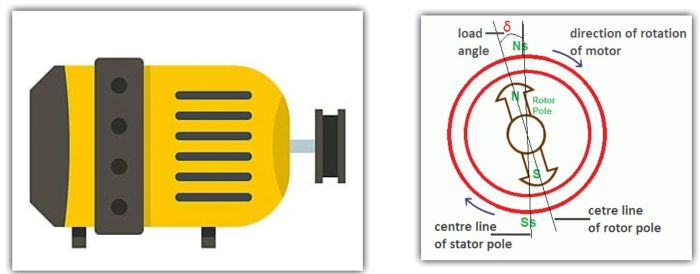
मान लीजिए motor initially no-load condition पर है, जहाँ load angle लगभग zero होता है। जैसे ही load अचानक बढ़ता है, rotor की speed temporarily rotating magnetic field से कम हो जाती है और load angle बढ़ जाता है। Rotor नई equilibrium position को पाने के लिए rotating magnetic field को follow करता है, यानी उसे hunt करता है। कुछ समय बाद rotor equilibrium position प्राप्त कर लेता है, लेकिन जब भी load में variation होता है, यह process बार-बार repeat होता है और इसी को hunting कहा जाता है। अब इसे विस्तार से समझते हैं
जब एक synchronous motor no-load condition पर चलती है, तब उसका load angle (δ) लगभग 0° होता है और system पूरी तरह stable रहता है। जैसे-जैसे load को धीरे-धीरे बढ़ाया जाता है, वैसे-वैसे load angle भी smoothly बढ़ता है और motor बिना किसी disturbance के steady condition में काम करती रहती है।
लेकिन असली समस्या तब शुरू होती है जब load अचानक (suddenly) apply किया जाता है। उस समय rotor अपनी inertia के कारण तुरंत response नहीं दे पाता, जिससे वह थोड़ी देर के लिए slow down हो जाता है और load angle अचानक बढ़कर δ₁ तक पहुँच जाता है।
अब motor equilibrium को achieve करने की कोशिश करती है, लेकिन rotor तुरंत stable नहीं होता। वह अपनी नई position को cross करके आगे बढ़ जाता है, जिसे overshoot कहा जाता है (δ₁ → δ₂)। इस स्थिति में electrical power developed, applied load से अधिक हो जाती है, जिससे rotor फिर से accelerate करने लगता है।
इसके बाद rotor synchronous speed तक पहुँचता है, लेकिन वहाँ भी stable नहीं रहता और उसे cross कर जाता है। जैसे ही rotor synchronous speed से ऊपर जाता है, load angle कम होने लगता है और system फिर से imbalance में आ जाता है।
इस पूरी प्रक्रिया के कारण rotor एक बार में stable नहीं होता, बल्कि नई equilibrium position के आसपास बार-बार आगे-पीछे oscillate करता रहता है। इसी continuous oscillation को Hunting या Phase Swinging कहा जाता है।
Hunting कहाँ होती है?
Hunting या Phase Swinging सिर्फ synchronous motor तक सीमित नहीं है। यह synchronous generators में भी होती है, खासकर तब जब load में अचानक बदलाव होता है। इसलिए यह एक common dynamic phenomenon है जो synchronous machines में देखने को मिलता है।
Hunting के कारण (Causes of Hunting)
Hunting होने के मुख्य कारणों में load में sudden change, generator या supply system में fault, field current में variation और load torque में cyclic variation शामिल हैं।
Hunting होने के कई कारण हो सकते हैं। सबसे common कारण है load का अचानक बदलना। इसके अलावा, harmonic torque वाले load भी hunting को बढ़ावा देते हैं।
निम्न कारणों से hunting उत्पन्न होती है:
- Sudden change in load (अचानक load परिवर्तन)
- Sudden change in field current (field current में बदलाव)
- Harmonic torque वाला load
- Supply system में fault
Hunting के प्रभाव (Effects of Hunting)
Hunting के कारण synchronous machine अपना synchronism lose कर सकती है, यानी rotor rotating magnetic field के साथ same speed पर नहीं घूमता। इससे supply voltage में variation होता है जिससे lamp flickering देखने को मिलता है। इसके अलावा resonance condition develop हो सकती है, rotor shaft पर mechanical stress बढ़ता है, losses और temperature increase होते हैं, जिससे efficiency और performance कम हो जाते हैं।
Hunting या Phase Swinging का असर मशीन की performance पर साफ दिखता है। इससे motor synchronism खो सकती है, rotor shaft पर mechanical stress बढ़ जाता है, और machine में losses तथा temperature भी बढ़ते हैं। इसके साथ ही current और power में sudden surges आते हैं और system में resonance का खतरा भी बढ़ जाता है।
Hunting के कई हानिकारक प्रभाव होते हैं:
- Synchronism loss (मोटर sync खो सकती है)
- Rotor shaft पर mechanical stress बढ़ता है
- Losses बढ़ते हैं और temperature rise होता है
- Current और power में surges उत्पन्न होते हैं
- Resonance की संभावना बढ़ जाती है
Hunting को कैसे कम करें? (Reduction Methods)
Hunting effect को कम करने के लिए damper winding और flywheel का use किया जाता है। Damper winding में low-resistance copper या aluminium bars rotor के pole face में लगाए जाते हैं, जो rotor slip के दौरान EMF induced करके opposing torque पैदा करते हैं और oscillation को damp करते हैं। Flywheel एक heavy rotating mass होता है जो energy store करता है और sudden load changes को smooth करता है, जिससे rotor speed stable रहती है। इसके अलावा machine design के दौरान suitable synchronizing power coefficient चुनकर भी hunting effect को reduce किया जा सकता है।
Hunting को पूरी तरह रोकना मुश्किल होता है, लेकिन इसे काफी हद तक कम किया जा सकता है। इसके लिए दो मुख्य तरीके इस्तेमाल किए जाते हैं।
Use of Damper Winding
यह low electrical resistance वाली copper/aluminium bars से बनी होती है, जो salient pole machine के pole faces के slots में embedded होती हैं। Damper winding rotor slip के opposite direction में torque produce करके hunting को कम करती है। Damping torque की magnitude slip speed के proportional होती है।
2. Use of Flywheels
Prime mover के साथ एक large और heavy flywheel लगाया जाता है। यह prime mover की inertia को बढ़ाता है और rotor speed को constant बनाए रखने में मदद करता है।
निष्कर्ष (Conclusion)
Hunting एक natural लेकिन important phenomenon है, जो synchronous motor में तब दिखाई देता है जब system में अचानक बदलाव होता है। अगर इसे control न किया जाए, तो यह motor की stability और efficiency को प्रभावित कर सकता है। इसलिए practical systems में damper winding और flywheel जैसे methods का उपयोग करके hunting को कम करना बहुत जरूरी होता है।
हमें Single-phase Induction Motors की ज़रूरत कहाँ पड़ती है?
उत्तर: Single-phase induction motors की आवश्यकता वहाँ होती है जहाँ: (i) 3-phase supply उपलब्ध न हो। (ii) Efficiency (कार्यक्षमता) बहुत ज्यादा मायने न रखती हो। (iii) रेटिंग 1 H.P. (Horse Power) से कम हो। (iv) Equipment (उपकरण) पोर्टेबल हो, जिसे आसानी से यहाँ-वहाँ ले जाया जा सके।
Single-phase Induction Motor का Power Factor लो (low) क्यों होता है?
उत्तर: इसका मुख्य कारण Large Magnetizing Current है, जो फुल-लोड करंट का लगभग 60% से 70% तक होता है। इसी वजह से, नो-लोड (no-load) पर भी इन मोटर्स का तापमान फुल-लोड तापमान के काफी करीब पहुँच जाता है।
Damper winding का function क्या होता है?
Starting torque provide करना
Hunting को prevent या minimize करनाHunting क्या होता है?
Synchronous motor पर load के sudden changes rotor में oscillations set up करते हैं। Rotor का अपनी new equilibrium position के around oscillate करना hunting कहलाता है।
Hunting के effects क्या होते हैं?
Synchronism lose हो जाता है
Rotor shaft पर mechanical stress develop होता है
Machine losses increase हो जाते हैं
Machine का temperature increase हो जाता है