Table of Contents
What is Resistance?
When electricity flows through a substance, it doesn’t always have a smooth path. The thing that tries to slow down or stop this flow is called resistance.
Electricity is actually the movement of tiny particles called free electrons. These electrons move through a material to create an electric current. But inside every material, there are atoms and molecules that can get in the way of these moving electrons. This interference is what we call resistance—it’s simply how much a material tries to block or slow down the flow of electricity.
Some materials, like silver, copper, and aluminium, let electricity flow very easily. They don’t stop the electrons much, so their resistance is very low. These are called conductors because they conduct electricity well.
Other materials, like glass, rubber, dry wood, or mica, don’t let electricity flow easily. They resist a lot and block the movement of electrons. These are called insulators because they insulate or protect against the flow of electricity.
In short:
- Low resistance = good flow = conductor
- High resistance = poor flow = insulator
This is how we understand which materials help electricity move and which ones try to stop it.
Unit of Resistance:
The practical unit of resistance is called the ohm. We use the symbol Ω (called “omega”) to represent it.
Now, let’s understand what this means in a simple way:
A wire is said to have a resistance of 1 ohm when a voltage of 1 volt is applied across it and it allows a current of 1 ampere to flow through it.
Imagine this like a water pipe. If the pipe offers just enough resistance that one “bucket” of water flows through when one “push” is applied, then that pipe has 1 ohm of resistance.
There’s another easy way to think about it:
A wire has a resistance of 1 ohm if it produces 1 joule of heat energy when a current of 1 ampere flows through it for 1 second. That’s a small amount of heat — about 0.24 calories.
So, whether you’re looking at how much current flows or how much heat is produced, 1 ohm is the same. It’s a simple, clear way to measure how much a wire resists the flow of electricity.
Types of Resistors
A resistor is a small part used in electrical and electronic circuits. Its job is to control the flow of electric current. You can think of it like a speed breaker for electricity — it slows it down, controls it, or shares it where needed.
Resistors are mostly used to:
- Limit the current so it doesn’t get too strong.
- Divide voltage into smaller parts.
- Produce heat in some special devices.
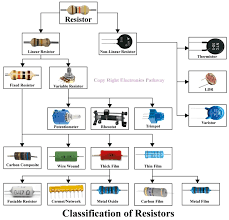
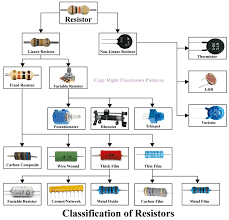
There are many kinds of resistors, but here are the ones you’ll see most often in circuits:
two basic types of resistor.
Non Linear Resistors
Linear Resistors
Linear Resistors
Linear resistors are the kind of resistors whose resistance stays steady or changes in a straight, predictable way when temperature or voltage is applied. This means they behave in a smooth and consistent manner — no surprises!
When electricity flows through a linear resistor, it causes a drop in voltage. Most resistors used in everyday electronics are linear. They follow a simple rule: if you increase the current, the voltage goes up at the same rate. It’s like turning up the volume slowly and evenly on a speaker — no sudden jumps.
There are two main types of linear resistors:
Fixed Resistors
These resistors have a set value that doesn’t change. Once they’re made, their resistance stays the same no matter what.
Variable Resistors
These resistors can be adjusted. You can change their resistance by turning a knob or sliding a control. They’re useful when you want to control things like volume, brightness, or speed.
Fixed Resistors
A fixed resistor is a small but important part used in electronic circuits. It has one job: to resist the flow of electric current. What makes it “fixed” is that its resistance value never changes. It stays the same, no matter how much electricity flows through it.
Fixed resistors are everywhere. They are one of the most common and useful components in electronics. You can find them in remote controls, TVs, mobile phones, radios, and many other devices. Their main job is to control how much current flows in different parts of a circuit, helping everything work just right.
Types of Fixed Resistors
There are different kinds of fixed resistors. Each type has its own way of being made and is used for different needs. Here are the main ones:
1. Wire Wound Resistors
These resistors are made by winding a thin wire around a core. The wire is usually made of a special metal that resists electricity well. Wire wound resistors are strong and can handle a lot of power, so they are used in devices that get hot or need more current control.
A wire wound resistor is made by wrapping a special wire around a rod that does not conduct electricity. This wire is usually made from a metal alloy that resists the flow of electricity. After wrapping, the whole thing is covered with an insulating material to keep it safe.
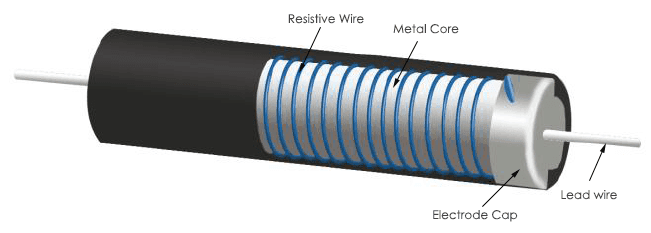
Most often, the wire is made from a nickel-chromium alloy. This metal is chosen because its resistance doesn’t change much when it gets hot or cold. Wire wound resistors can handle higher temperatures than regular carbon resistors, which makes them stronger and more reliable.
These resistors can also handle a lot of power — anywhere from 12 watts up to 225 watts — making them perfect for many different uses where durability is important.
Advantages and Disadvantages of Wire Wound Resistors
Advantages:
Wire wound resistors make very little noise compared to other types, like carbon resistors. They work well even when there is too much electricity flowing through them. They are strong and reliable. You can use them safely with direct current (DC) and sounds in the audio frequency range.
Disadvantages:
The main downside is that wire wound resistors are more expensive. Also, they do not work well with very high-frequency signals, so they are not good for some fast electronic equipment.
Where Wire Wound Resistors Are Used
Wire wound resistors are special parts that help control electricity very carefully. They are used when you need to measure electric current very accurately or keep the flow of electricity balanced. For example, they work with devices like ammeters, which measure how much electric current is passing through.
These resistors are strong and can handle a lot of power, so they are often found in big machines, testing tools, and industrial equipment. Whenever precise control or measurement of electricity is important, wire wound resistors are the right choice.
2. Thin Film Resistors
These resistors are made by putting a very thin layer of metal or other material onto a surface. They are very accurate and stable, which means they work well in devices where tiny changes in current can make a big difference.
A film resistor is made by covering a special ceramic stick with a thin layer of resistive material. This material can be either carbon, which makes a carbon film resistor, or a metal like nickel-chromium, which makes a metal film resistor. To get the exact resistance needed, a small part of this material is carefully cut away in a spiral shape around the stick.
Metal film resistors work better than carbon film resistors because they are more reliable and precise.
There are two further types of thin film resistors.
- Carbon Film Resistors
- Metal Film Resistors
Carbon Film Resistors
Carbon film resistors are small electronic parts that help control the flow of electricity in a circuit. Inside, they have a thin layer of carbon wrapped around a strong, heat-safe core made from ceramic. This special design makes them work better and last longer than older types of carbon resistors.
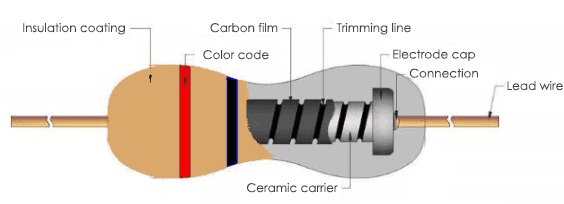
People like using carbon film resistors because they don’t make much noise, can handle a wide range of conditions, and stay steady over time. They are an important part of many electronic devices, helping them run smoothly and safely.
Metal Film Resistors
Metal film resistors are tiny electronic parts used to control the flow of electric current in a circuit. They look very similar to carbon film resistors, but instead of using carbon, they use a thin layer of metal or a special mix of metal and glass. This thin layer is placed on the resistor to make it work properly.
These resistors are known for being cheap, small, and very reliable. One of their best features is that they don’t change much with temperature. Even when the surrounding temperature goes up or down, they stay very stable. This makes them perfect for devices where accurate and quiet performance is needed.
In simple words, metal film resistors help electronic devices run smoothly, quietly, and without problems—even when things heat up a bit.
Thick Film Resistors
Thick film resistors are a special type of resistor used in many electronic devices. They are made in a similar way to thin film resistors. But there is one big difference – instead of using a thin layer of resistive material, thick film resistors use a much thicker layer. That’s where they get their name from – “Thick Film.”
Because the layer is thicker, these resistors are strong, reliable, and work well in many different conditions. They are also easy to produce, which makes them very common in everyday electronics.
There are also two special types of thick film resistors that are used for more specific needs. Each type has its own purpose and advantages.
- Metal Oxide Resistors
- Cermet Film Resistors
- Fusible Resistors
Metal Oxide Resistors
Metal oxide resistors are made by heating a glass rod and coating it with a thick film of tin chloride. This process forms a strong and stable layer that works as the resistor.

These resistors come in many resistance values, making them useful for different electrical needs. They are known for their excellent stability, even at high temperatures. They also create very little noise when working and can handle high voltages without any problem.
In short, metal oxide resistors are reliable, quiet, and strong – perfect for use in tough conditions where performance matters.
Cermet Oxide Resistors (Network Resistors)
Cermet oxide resistors are special types of resistors made with a mix of ceramic and metal materials. Inside, they use ceramic as an insulating base. Around this ceramic base, a thin layer of carbon or metal alloy is carefully added. This combination of ceramic and metal is called “Cermet.”
These resistors are usually made in a square or rectangular shape. Underneath, they have pins or leads that make it easy to place them on printed circuit boards (PCBs).
One of the best things about cermet oxide resistors is their stability. Even when the temperature gets very high, their resistance values stay the same. This makes them very reliable in electronic devices where heat can be an issue.
Fusible Resistors
A fusible resistor looks and works much like a regular wire-wound resistor. But it has a special job. When the power flowing through a circuit gets too high — more than the resistor can safely handle — this resistor “fuses.” That means it breaks the circuit, stopping the flow of electricity. This helps protect the device from getting damaged.
That’s why it’s called a fusible resistor — it acts like a resistor and a fuse at the same time.
Fusible resistors do two important things:
- They control the current (just like normal resistors).
- They break the circuit when there’s too much power (just like a fuse).
These resistors are used in many valuable electronic devices like TVs, amplifiers, and other sensitive equipment where safety is very important.
They usually have a low resistance, often less than 10 Ohms.
In short, fusible resistors are smart little protectors. They quietly do their job behind the scenes, keeping your electronics safe and sound.
3. Carbon Composition Resistors
These are made from a mix of carbon and other materials. They were very common in older electronics. Today, they are not used as much, but they are still helpful in some high-voltage or high-energy situations.
A carbon resistor is made by mixing tiny bits of carbon with an insulating material and a sticky binder. How much carbon and insulator are mixed together decides how much the resistor resists electric current. This mix is shaped into a small rod, and wires are attached to both ends so it can be connected in a circuit.
After that, the whole thing is covered with a plastic case. This case keeps out moisture and dust, which could harm the resistor.
Carbon resistors are cheap to make, but they don’t like changes in temperature—they can behave differently if it gets too hot or cold. You can find carbon resistors that handle power from very small amounts, like 1/8 watt, up to about 2 watts.
Cermet Resistors
A cermet resistor is a small electronic part made by putting a thin layer of metal, like nichrome or chromium cobalt, onto a piece of ceramic. The word “cermet” comes from combining the words “ceramic” and “metal.” These resistors are special because they have very exact values, which means they control electricity in a very precise way.
Characteristic of Fixed Resistor
Fixed resistors are small and affordable parts used in many electronic devices. Because they don’t take up much space, they fit easily into circuits. You can find them in different sizes, with different power limits and resistance values to match what you need.
They are easy to connect and can handle higher voltages without trouble. However, fixed resistors aren’t perfect—they can change their behavior when they get hot, meaning they’re not very stable in temperature. Also, compared to some other resistors, they might make a little bit of noise.
What is a Variable Resistor?
A variable resistor is a type of resistor that lets you change how much resistance it gives. You can adjust it to let more or less electric current pass through. It has a small part called a slider that moves across the resistor inside. This slider helps you choose how much resistance you want.
Think of it like turning the volume knob on a radio. When you turn it, you’re actually using a variable resistor to make the sound louder or softer.
A variable resistor is similar to a potentiometer, but it only uses two wires instead of three.
Types of Variable Resistors
There are three main types of variable resistors:
1. Potentiometer
This has three wires and is used to control voltage. You’ll find it in things like volume controls, dimmer switches, and joystick controls.
A potentiometer is a small, smart device that helps us control the flow of electricity in a circuit. It has three terminals. Two of them are fixed, and the third one is special—it’s connected to a moving part called a wiper.
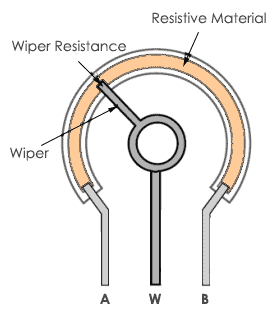
Imagine turning the volume knob on a speaker. As you turn it, the sound gets louder or softer. That’s exactly what a potentiometer does—it adjusts the voltage in a smooth and controlled way.
The resistance between the two outer terminals always stays the same. But the wiper moves across this resistance, and that changes the voltage. By simply rotating the control shaft (just like turning a knob), you can increase or decrease the voltage.
Potentiometers are used in many everyday things like fans, radios, lights, and more. They help make machines smarter and more adjustable.
Symbol of Potentiometer

2. Rheostat
This one usually uses just two wires and is used to control the flow of electric current. You can find it in fans, heaters, or lights.
What is a Rheostat?
A rheostat is a device that helps control the flow of electric current. You can think of it like a volume knob, but instead of sound, it controls how much electricity flows through a wire.
It usually has two or three metal terminals. You can adjust it by hand, which is why it’s often used when someone needs to control the current manually.
Rheostats are also called tapped resistors or variable wire wound resistors. That’s just a fancy way of saying they can change the amount of resistance they give to the flow of electricity.
How is a Rheostat Made?
To make a rheostat, a special wire called Nichrome (which doesn’t let electricity pass too easily) is tightly wrapped around a strong ceramic stick. This ceramic stick doesn’t conduct electricity and helps keep everything safe and steady.
Once the wire is in place, it’s covered with a protective outer shell. A metal band is then placed over the wire. This band can slide or move, and as it moves, it changes how much of the wire is being used. This is what changes the current.
Rheostat vs. Potentiometer
Sometimes, the same device can be used either as a rheostat or a potentiometer. The difference is in how they’re connected in a circuit.
- A rheostat is used to control current.
- A potentiometer is used to control voltage.
What is the Main Difference Between a Potentiometer and a Rheostat?
A potentiometer and a rheostat are actually very similar. In fact, both are just types of variable resistors. That means you can adjust them to control how much resistance they give in a circuit.
But here’s the real difference:
It’s all about how and why you use them.
Rheostat:
If you use the variable resistor to control the flow of current in a circuit, it’s called a rheostat.
Think of it like a water tap—turn it to let more or less water flow. A rheostat works the same way, but with electricity instead of water.
Potentiometer:
If you use the same type of resistor to control voltage, then it’s called a potentiometer.
It’s like a volume knob on a speaker—you turn it to make the sound louder or softer by adjusting the voltage.
So, what’s the main difference?
The purpose.
- Rheostat = controls current
- Potentiometer = controls voltage
That’s it! Same device, just used in different ways.
3. Trimmer Resistor
This is a tiny version of a variable resistor. It’s used when you only need to set the resistance once or adjust it rarely. It’s mostly found inside electronic gadgets and circuits.
Trimmers
Trimmers are special kinds of small knobs or screws that you can turn to change the amount of electrical resistance in a circuit. Think of them like little volume controls, but instead of changing sound, they adjust the flow of electricity. They have a tiny screw on top that you can turn gently with a small screwdriver.
By turning this screw, you change how much resistance the trimmer gives. This helps make the device work better and more accurately. Trimmers are made from different materials like carbon and wire, which help them last and work well.
They come in different sizes of resistance — from very small (about 50 Ohms) to very large (up to 5 million Ohms). Also, they handle small amounts of power, usually between one-third to three-quarters of a Watt.
In short, trimmers are simple tools inside electronics that let us fine-tune how things work by adjusting the resistance just right.
Non-Linear Resistor
A non-linear resistor is a special kind of resistor. In this type of resistor, the flow of electric current does not increase in a straight line when you increase the voltage. This means it does not follow Ohm’s Law, which normally says that current goes up evenly as voltage goes up.
Instead, in a non-linear resistor, the current can change in different ways depending on how much voltage or heat is applied. Sometimes it goes up slowly, and sometimes it rises quickly. It all depends on the material inside the resistor and how it reacts.
These resistors are very useful in many devices that need protection or control. They are often used to handle changes in voltage or to keep circuits safe.
There are many types of non-linear resistors, but the most common ones are:
Diodes (used as resistors) – These only let current flow in one direction and change their behavior with voltage.
Thermistors – These change resistance when the temperature changes.
Varistors – These change resistance when the voltage changes.
Thermistors
Thermistors are special resistors that change their resistance when the temperature changes. They have two terminals and are very sensitive to temperature. When the temperature goes up, the resistance goes down, and when the temperature goes down, the resistance goes up. This makes thermistors useful for sensing temperature.
What is an NTC Thermistor?
An NTC thermistor is a special kind of resistor. It changes how much it resists the flow of electricity when the temperature changes.
Now here’s the interesting part:
NTC stands for Negative Temperature Coefficient. This means that when the temperature goes up, its resistance goes down. So, as it gets hotter, it lets more electricity pass through. That’s why the symbol of the NTC thermistor has a small “-t” sign — because it reacts in the opposite way to temperature changes.
How Does an NTC Thermistor Work?
There are two simple ways to heat up an NTC thermistor:
- Changing the temperature around it.
For example, if you place it in a warm room or near a heater, the air around it warms up. This heat makes its resistance go down. - Passing more current through it.
If you increase the amount of electricity going through the thermistor, it heats up by itself. This is called the self-heating effect. The thermistor warms up from the inside, and again, its resistance drops.
Why is an NTC Thermistor Special?
NTC thermistors are more sensitive than many other temperature sensors. They react quickly and accurately to small changes in temperature. In fact, they often work better than some other sensors like silicon-based sensors or RTDs (Resistance Temperature Detectors).
Where Do We Use Them?
NTC thermistors are used in many everyday things — like:
Even in batteries, to keep them from overheating
Digital thermometers
Air conditioners
Cars
Phones
Symbol of NTC thermistor

Varistor Resistors
A varistor is a resistor that doesn’t follow a straight rule. Instead, the amount of current flowing through it changes in a more complex way depending on the voltage applied. The most common type is called an MOV, which stands for metal oxide varistor. Varistors protect circuits from sudden voltage spikes.
Photo Resistor or LDR (Light Dependent Resistors)
A photo resistor, also called an LDR, is a resistor that changes its resistance based on the amount of light hitting it. When there is more light, the resistance becomes lower, and when it’s darker, the resistance becomes higher. These are used in devices that need to detect light levels.
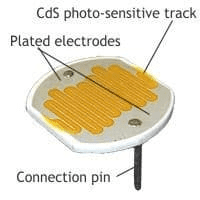
Surface Mount Resistors
Surface Mount Resistors, or SMD resistors, are small, rectangular resistors made to be placed directly onto the surface of a circuit board. They are part of Surface Mount Technology, which helps make electronic devices smaller and more efficient.
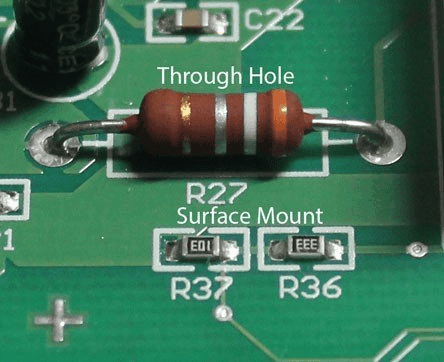
What Are Photoresistors (LDRs) and How Are They Used?
Photoresistors, also known as Light Dependent Resistors (LDRs), are special parts that change their resistance based on the amount of light they receive. When it’s bright, they let electricity pass easily. When it’s dark, they resist electricity more.
Because of this, photoresistors are used in many everyday devices to help them “see” light and respond to it automatically. Here are some common uses:
- Burglar Alarms: They help detect when someone passes by a light beam or when light changes suddenly.
- Automatic Door Openers: When a person comes close and changes the light, the door opens without needing to push a button.
- Flame Detectors: They sense the light from flames to warn about fire.
- Smoke Detectors: They can detect changes in light caused by smoke to alert people.
- Light Meters: These devices measure how bright or dark a place is.
- Automatic Street Lights: They turn street lights on when it gets dark and off when it’s bright outside.
- Photographic Equipment: Cameras and other photo devices use LDRs to adjust settings based on light levels.
Where and Why We Use Resistors
Resistors are tiny but very important parts in many electrical devices. They help control how electricity flows and do a lot of useful jobs. There are two main types: fixed resistors (which have one set value) and variable resistors (which you can adjust).
Here are some of the common ways resistors are used:
- Controlling Current: Resistors make sure the right amount of electric current flows in a circuit. They stop too much current from passing through, which can protect other parts.
- Changing Electricity into Heat: Sometimes, resistors turn electrical energy into heat. This is useful in things like heaters or irons.
- Helping Meters Work: In instruments like ammeters (which measure current) and voltmeters (which measure voltage), resistors help these tools read correctly. They do this by acting as shunts or multipliers.
- Regulating Temperature: Some resistors can help keep temperature steady in certain devices.
- Controlling Voltage: They can reduce voltage to the levels that parts of a circuit need, preventing damage.
- Protecting Circuits: Certain resistors, like fusible resistors, act like safety guards by breaking the circuit if something goes wrong.
- In Labs and Everyday Appliances: Resistors are used in laboratories for experiments and are found in household appliances like electric heaters, irons, and immersion rods.
- In Electronics Manufacturing: They are essential parts in almost all electronic devices we use every day.
FAQ
What is Resistance?
Imagine electricity as water flowing through a pipe. Just like water can flow fast or slow depending on how wide or blocked the pipe is, electricity flows through wires. But sometimes, something slows it down. That “something” is called resistance.
Resistance is what stops or slows down the flow of electric current in a circuit. Every material — like metal, plastic, or rubber — has a different amount of resistance.
Some things, like copper and silver, let electricity pass through very easily. These are called conductors because they don’t resist much — like a wide, smooth water pipe.
Other things, like rubber or wood, don’t let electricity flow through easily. These are called insulators because they resist a lot — like a pipe that’s mostly blocked.
We measure resistance using a unit called ohms, and we show it with a special symbol that looks like this: Ω.
In short:
Resistance controls how easily electricity can move. Less resistance means more flow, and more resistance means less flow.What do resistors do?
Resistors are tiny but very important parts used in almost every electronic device. Their main job is to control the flow of electric current — like a gate that allows just the right amount of electricity to pass through.
Think of electricity like water flowing through a pipe. If the water is rushing too fast, you might use something to slow it down. That’s exactly what a resistor does with electricity. It slows it down or limits it so that other parts in a circuit don’t get damaged.
Resistors can also help divide voltage, control timing, or even produce heat when needed. They’re used in small gadgets like mobile phones and in big machines like elevators or trains.What are the two types of resistors?
There are two main types of resistors: fixed resistors and variable resistors.
A fixed resistor has only one job—to provide a set amount of resistance. This value never changes, no matter what. It’s made that way during manufacturing. The resistance value is usually written on it or shown with colored stripes. These resistors are used in almost all electronic devices because they are simple, reliable, and do their job well.
A variable resistor, on the other hand, can change its resistance. You can turn a knob or slider to adjust how much resistance it gives. This is useful when you want to control something, like the volume on a speaker or the brightness of a light. These are not used as often because they have moving parts and can wear out more easily.
In short:
Fixed resistor = same resistance always.
Variable resistor = resistance can be adjusted.What causes a resistor to fail?
A resistor is a small but important part of any electronic device. Its job is to control the flow of electricity. But sometimes, it can stop working. Why does that happen?
Most of the time, a fixed resistor fails when it gets too hot. This can happen if too much electricity passes through it or if it’s used in a place that’s too hot. If it’s shaken or hit too hard—like during a fall or impact—it can also break inside. When this happens, the resistor usually stops working completely and creates an open path where no electricity can flow.
Moisture in the air, like high humidity, can also affect resistors. Over time, it can make the resistor weaker by slowly increasing its resistance.
Now, variable resistors (the kind that you can adjust) can wear out if they are used too much. Tiny parts inside them can rub off and create little particles. These particles can cause unwanted connections or block the flow of electricity.

Hi, I’m Pranjul — the person behind this website.
I hold a Diploma and B.Tech in Electrical Engineering, along with hands-on training through ITI. For over 3 years, I worked as an ITI College Instructor, teaching electrical fundamentals and practical skills to hundreds of students.
Through that experience, I noticed something: most electrical troubleshooting information online is either too technical for everyday homeowners, or too vague to actually solve real problems. That’s the gap this website aims to fill.